

Beyond the Ink: The Art and Vision of Anu Priya
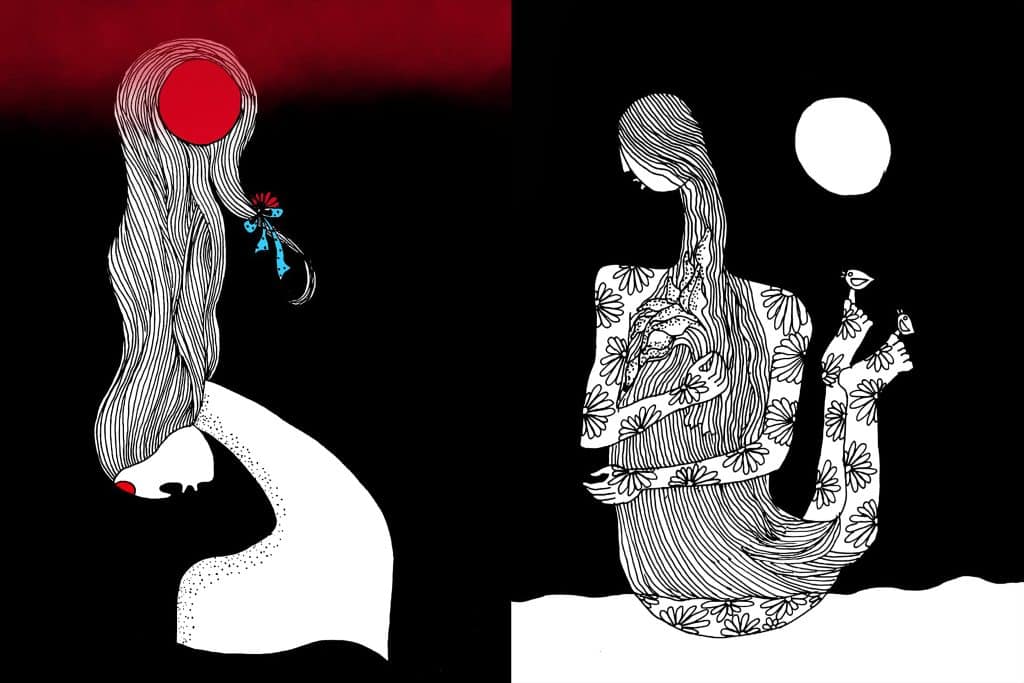
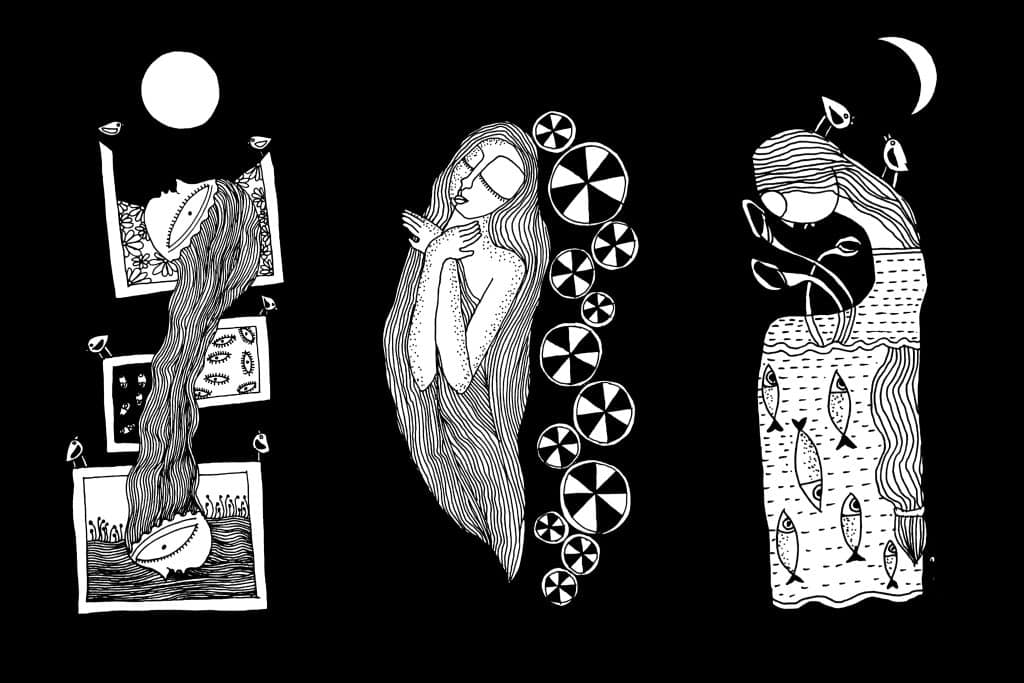
Art has the power to make us pause, feel and see the world differently. Anu Priya’s work does just that. Through expressive figures, striking black-ink compositions and thought-provoking imagery, she explores the complexities of human emotion and the realities of women’s lives, creating pieces that are as meaningful as they are visually compelling.
I had the pleasure of interviewing Anu Priya for IAWW to explore the ideas, emotions and creative vision behind her art. Our conversation offered a deeper insight into her distinctive approach and the stories she seeks to tell through her work. With a strong artistic identity and a growing presence in the art world, Anu Priya is an artist whose work deserves wider recognition. For collectors and art enthusiasts who appreciate art that speaks beyond the canvas, her creations are well worth discovering.
What can you tell IAWW about your childhood?
I was born in Supaul, Bihar, in a joint family. I have two elder brothers and one elder sister. My family has been immensely influential in shaping who I am; both as an artist and as a person. Growing up, we didn’t have too much. My father was a simple laborer who worked very hard so that the needs of our family could be met. My Mother, a housewife, was also very simple. Sometimes she stayed hungry or ate only salted roti, saving the vegetables for my siblings and I to eat. During festivals, when Mithai (Indian sweets) arrived, she would distribute it evenly among all the children. I used to think she didn’t like sweets, but she was being a mother, making a sacrifice for all of us. As a family, we have certainly experienced many struggles, however, my parents made sure all our wishes were fulfilled. There are no words in this world to express my gratitude to them. I honestly wouldn’t change anything about my childhood.
How about school?
I attended Gyan Ganga School in Bihar – pre 6th grade. I actually remember there were several times when there was no money to pay for school fees and my teacher, Miss Neeta, helped. I cannot thank her enough. Everything eventually paid off in the end when I was selected to attend Navodaya Vidyalaya Supaul School. I studied there from grades 6 to 12.
Where do you live today?
I currently live with my husband and children in Faridabad.
How did you learn to draw and paint?
I am self-taught but I don’t consider myself an artist. I am a learner. I am essentially using my fingers of struggle to learn more and more. I was 3-years-old when I started drawing with chalk on slate. My uncle is a brilliant artist. I remember, he had sketched a deer, which hung on a wall in our house. I was completely in awe of the visual and tried to replicate it many times without luck. My uncle appreciated my enthusiasm and encouraged me to draw. Incidentally, my aunt is also a great artist, as is my mother, who is an expert in Aripan, a variation of Rangoli, practiced in Bihar. So, my childhood was enriched with creativity. I would have to say I was blessed with the art bug from my family and now with my imagination, I create work of my own.
What is your favorite color?
I actually don’t have a favourite colour. I like all colours. However, when it comes to my art, I feel the most comfortable and expressive when I paint in black. Black absorbs all other colours and speaks in its own language.
When did you know you wanted to be an artist?
Though I have been an artist pretty much all my life, it was when I turned 33 that I truly chose art as a career path. I still have a long way to go, but that’s the beauty of art, one can start at any age and continuing growing.
Why do you make art?
I make art because at times I find it difficult to express myself in words. So, I draw and convey my feelings loudly without words.
Being a woman, did you face any obstacles in your pursuance of art as a career choice?
Honestly, I have been very lucky. I have a very supportive family who have always encouraged me to draw and paint. So in this regard, I haven’t faced any obstacles. The same is true for the workplace, I have been blessed with some amazing opportunities.
Who inspires you?
My parents, Shri Bishwantah Jha and Neelam Devi. Their struggle has taught me a lot about life.
Which artists have influenced you?
Many artist have influenced me. Some great and many unknown. The artists that have encouraged and inspired my work the most include: Kunwar Ravindra Sir, Vikram Nayak, Aparajita Sharma, Rohit G Rusia and Sitaram Sir.
What inspires you?
People inspire me the most. My art is figurative, so I like to paint my interpretation of people’s emotions.
How would you describe your style?
There is no any particular style. I always strive to improve upon what I have made in the past. to draw something new in my own way.
How long does it take you to create your works?
It depends on the piece and my mood. Sometimes it can take one day while other times it might take several days to get right. It also depends on the canvas size. For book and magazine covers, I usually don’t take too long, however, if it is larger canvas for an exhibition, I like to take my time to add detail.
Can you take us through your process in steps?
There are no steps per se. I generally pull out a sheet and see where my hand and imagination takes me. Once I’m finished, I’ll decide if the visual will benefit from colour or not. Sometimes it’s better not to plan.
How do you know when a work is finished?
This is an interesting question. It’s something you feel from within. Many times, if I don’t feel it I’ll put the artwork to the side and return to it later and make adjustments; perhaps add colour to an otherwise black and white piece or change the colour scheme altogether – it depends.
Does your opinion about your artwork change the longer you look at it?
Sometimes. I generally love to create in black ink but I have, on more than one occasion, revisited certain artworks and added a splash of colour.
What is your most important artist tool?
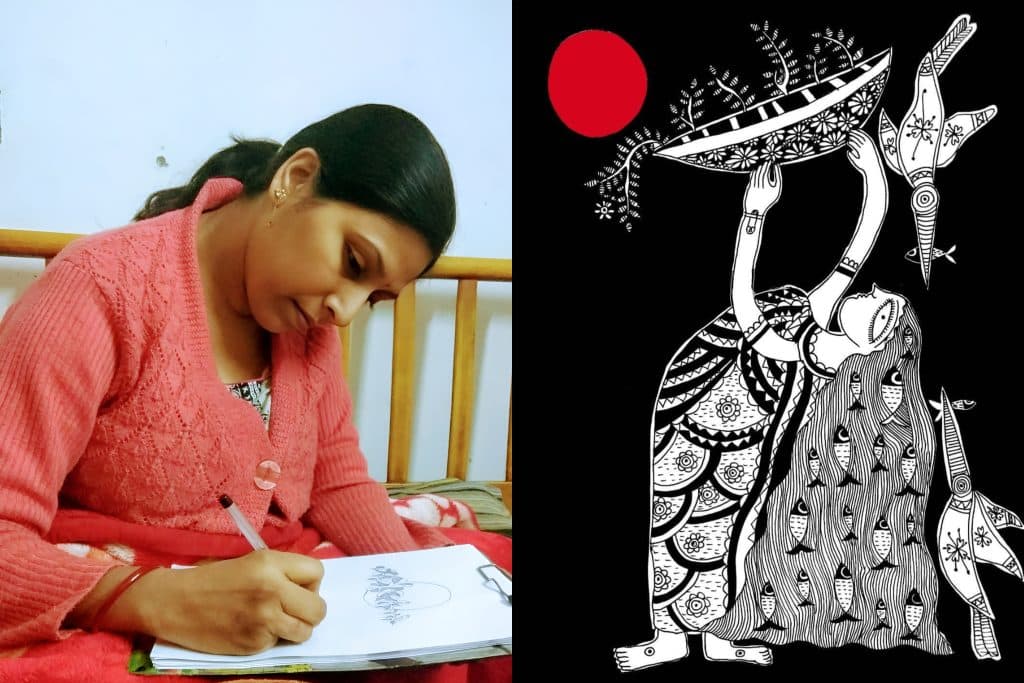
Definitely a gel pen.
Any brand in particular?
I like working with different sizes of Jiffy pens and Brustro technical pens.
How about paper? Do you have a preference?
Yes. I generally prefer drawing on white low grain A4 paper, 80 GSM.
Do you have a favorite work of yours?
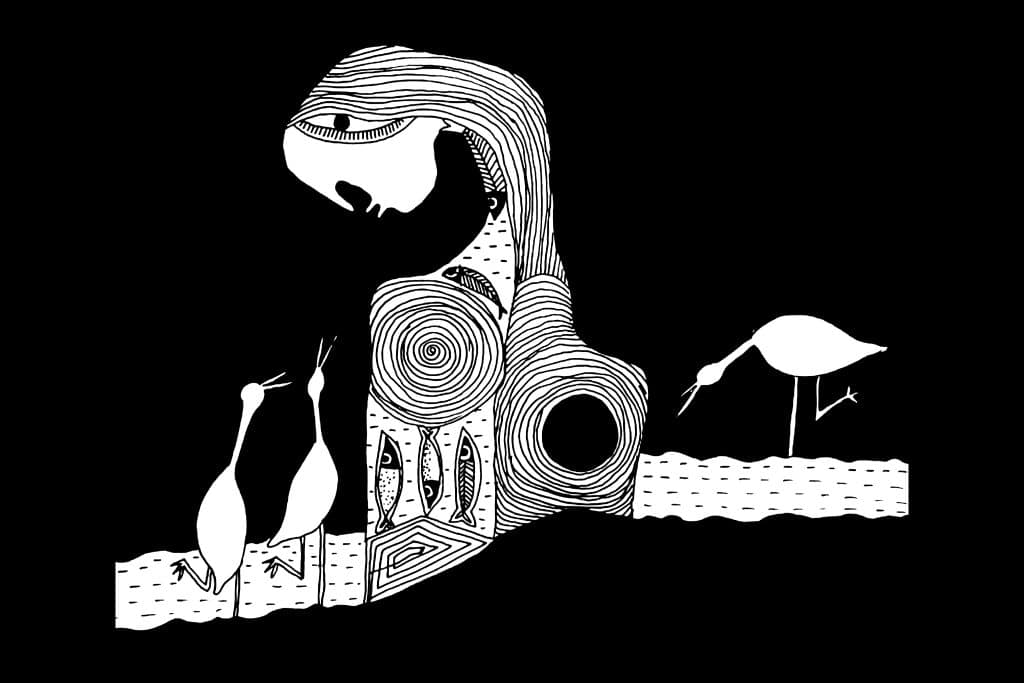
It’s difficult to pick, but I have to say I like ‘Women in this World’. I’m rather proud of this one.
How is ‘Women in this World’ a comment on current social or political issues?
It’s my interpretation of how women can feel isolated. At times, women are not treated as a human being. The cranes hovering around the woman is representative of the behavior of society towards her. The cranes view the woman in the same manner they would a fish, and thus want to eat her at any cost. This earth will only be balanced by equality between the two sexes. We have to respect each other’s presence in in order to create a better and beautiful world to live in.
How long did it take to create?
1 day.
What materials did you use?
I used a simple gel pen on A4, 80 GSM paper.
What advice do you have for aspiring artists?
Be you. Whatever ideas you have in your mind, create art in your own original language so that whoever views it, can say, ‘yes, this artwork belongs to you’. In a sea of great artists, It’s all about creating your own identity. Strive to be unique and stand out.
By Joe S. Khera


